



Centrifugal Pump Working Benefits Types and How to Pick the Right Manufacturers
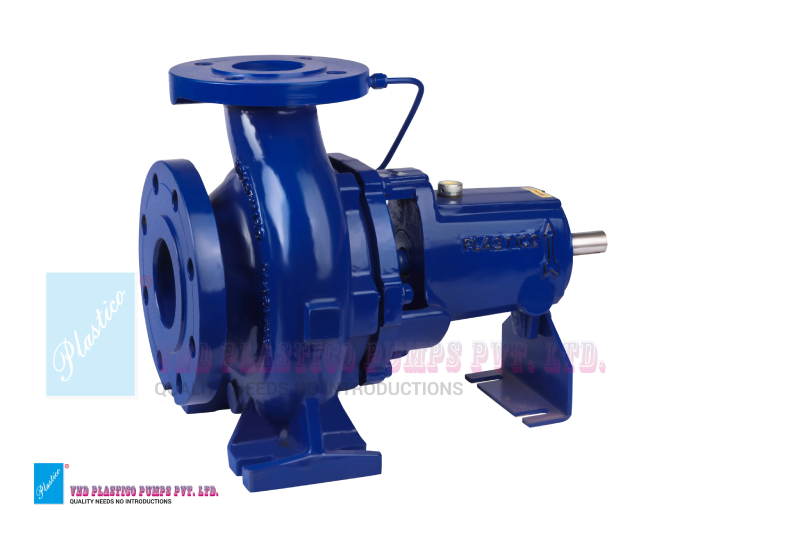
If you've been in an industry that deals with liquids, like water, or chemicals, you've likely heard the noise made by a Centrifugal Pump Manufacturers in the distance. They are the core component of many different industry operations, quietly transporting liquid from one place to another. However, when that core component needs maintenance or an upgrade, the real challenge begins: finding the most appropriate manufacturers of centrifugal pump.
It can feel a little too much, can't it? You are not merely purchasing a piece of plastic or metal, but buying reliability, efficiency, and the seamless operation of your business. This guide is designed to help alleviate that challenge. Plainly, we will cover everything important to help you feel confident in your purchases.
Introduction: What Exactly is a Centrifugal Pump?
To start with, do you remember in science class when they taught us to picture the scenario of swinging a bucket of water? It's a classic, really, but it shows the principle concisely: you swing a bucket of water really quickly in a circle - do you think the water falls out? Nope! It's forced to the bottom of the bucket because of the centripetal force, and in this case, that's the same motion required by a Centrifugal Pump Manufacturers to work.
In layman's terms: pumps are simply machines with rotating discs with blades (called an impeller) that moves liquid. The impeller spins quickly enough that the liquid is pushed to the outer rim of the disk, and that is how the motion is created to build pressure in the liquid and get it to flow out the pipe. They're reliable, and because of that, they're used in a lot of places: factories that have to handle aggressive chemicals, and even your local water utilities.
What is a Centrifugal Pump and How Does it Work?
Think of the pump as having two main parts: the impeller (the spinner) and the volute (the outer casing that looks like a snail shell).
Here’s the step-by-step magic:
- Suction: Liquid is drawn into the center of the impeller, known as the "eye."
- Spinning: The impeller rotates rapidly, and its curved blades push the liquid outward. This is the "centrifugal force" in action.
- Pressure Build-Up: As the liquid is flung to the outside, it gets squeezed into the volute casing. This casing is designed to slow the liquid down gradually, which converts its speed into pressure.
- Discharge: This newly pressurized liquid is then forced out through the discharge outlet and into the pipe system.
It’s an elegant and efficient process with very few moving parts, which is why it's so dependable.
Why You Need a Good Pump: The Key Benefits and Uses
Why is this type of pump so popular? The benefits are clear:
- Simple Design: Fewer parts mean less that can go wrong and easier maintenance.
- Smooth Flow: It provides a constant, steady flow of liquid, which is crucial for many industrial processes.
- Handles Large Volumes: It's excellent for moving high amounts of liquid quickly.
- Compact and Affordable: Generally, they are smaller and more cost-effective than other pump types of similar capacity.
Because of these advantages, you'll find centrifugal pump hard at work in:
- Water & Wastewater Treatment: Moving water through purification plants.
- Chemical Processing: Transferring acids, solvents, and other aggressive fluids.
- Oil & Gas: A critical part of refineries and pipelines.
- Food & Beverage: Handling ingredients like syrups, oils, and dairy products.
- Pharmaceuticals: Where hygiene and precision are non-negotiable.
- HVAC Systems: Circulating water for heating and cooling in large buildings.
The Different Types of centrifugal pump
Not all pumps are created equal. Knowing the basic types helps you talk to centrifugal pump manufacturers with confidence. They are often categorized by how their impeller is designed or how the pump is built.
- Based on Impeller Design:
- Open Impeller: The blades are open on both sides. Great for liquids with small solids or slurries, as they are less likely to clog.
- Closed Impeller: The blades are enclosed by shrouds on both sides. This is the most efficient type for clean liquids.
- Semi-Open Impeller: Has a shroud on one side. A good balance, handling slightly dirty liquids efficiently.
- Based on Casing Split:
- End-Suction Pumps: The most common type. Liquid comes in one end and goes out the top. Simple and versatile.
- Split-Case Pumps: The casing is split horizontally, allowing easy access to the impeller without disturbing the pipes. Perfect for high-pressure services.
- Multistage Pumps: Have multiple impellers in a series, each one boosting the pressure further. Used for applications requiring very high pressure.
Important Points to Know Before You Buy
Choosing the right pump isn't just about picking a type. Here’s a checklist of what you must consider:
- The Liquid's Properties: This is the most critical factor. What are you pumping? Is it water, a corrosive acid, a viscous oil, or a slurry with abrasive particles? The liquid determines the material of the pump.
- Material of Construction: For water, cast iron or stainless steel might work. But for harsh chemicals, you need something far more resistant. This is where specialized centrifugal pump manufacturers like VND Plastico Pumps Pvt. Ltd. excel, offering pumps made from high-performance plastics like PP, PVDF, and FRP that can handle the toughest chemicals without corroding.
- Flow Rate and Pressure: How much liquid do you need to move (flow rate in m³/hr), and how much push does it need (pressure or head in meters)? Your supplier will need these numbers.
- Temperature and Viscosity: Is the liquid hot? Is it thick? These factors significantly impact pump performance and selection.
How a Specialist Manufacturer Like VND Plastico Pumps Makes a Difference
With applications involving corrosive chemicals, there is the question of safety and longevity when choosing a manufacturer. This is the case where standard pumps are truly a liability.
VND Plastico Pumps Pvt. Ltd. has gained a reputation for doing the more difficult things and doing them well, such as the manufacture of all-plastic, corrosion-resistant, rugged, and reliable Centrifugal Pump Manufacturers. Partnering with a specialist like VND Plastico Pumps means more than product procurement; it means a partnership with a company that has the expertise to truly understand how to solve problems in very demanding applications.
The PVDF pumps outlast metal pumps when doing corrosive duties and are specifically manufactured to outlast metal pumps by years. Having the expertise and reputation for such niche market is a testimony to the reliability of their product that saves you the cost of frequent breakdowns and expensive downtime.
Conclusion: Make the Smart Choice for Your Operation
Choosing the right centrifugal pump is crucial for the health of your operations. Consider the entire allocated budget, summed up from the pump cost, the maintenance cost, the repair cost, and the cost of energy over the pump's operational use. The more energy- efficient the pump is, the more reliably it runs, the less maintenance it will need, and no maintenance will be less operationally expensive over time.
Use your requirements and the properties of the liquid to make your way to a manufacturer and not just anyone. Go for one who will offer you more than just a pump.
Ready to take on some of the toughest challenges to find a Centrifugal Pump Manufacturers that does the job you need it to? Today, look at the specialised, corrosion-resistant solutions from VND Plastico Pumps Pvt. Ltd. to see how they will take the reliability of your facility to the next level.
Frequently Asked Questions (FAQs)
Why is a centrifugal pump the best option?
centrifugal pump are appreciated for their easy use. Design is simple, they are able to pump and flow continuously, and they are inexpensive and low maintenance.
How do I know if I need a metal or a plastic centrifugal pump?
It all depends on the liquid. If the liquid is clean water or a non-corrosive liquid, a metallic pump would suffice (like stainless steel). If you are pumping aggressive/ dangerous fluids, you would make beno defect a plastic pump from manufacturers like VND Plastico Pumps made from PVDF or PP to avoid corrosion and failure.
What do I need to know before contacting centrifugal pump manufacturers?
Be sure you know the type of liquid and it’s chemical name and concentration.
The flow rate you need (if any), converted to m³/hr.
The pressure you want to pump or the height (in meters) of the pressure.
What is the temperature and viscosity of the liquid?
Are there any solid breackage?
What’s the difference between single-stage and multistage centrifugal pump?
A single-stage pump is usually for common activities that require low and medium pressure and has only one impeller, whilst a multistage pump has a minimum of two impellers that are in sequence and increase the pressure even more so it’s fit for more demanding tasks that require high pressure such as reverse osmosis systems and boiler feed water.
What are the reasons my centrifugal pump is losing some pressure or flow?
Some common reasons for this that I can think of are as follows. Wear and tear of the casing or the impeller. Air entering the suction line, this is called cavitation. A clogged suction filter, or a clogged impeller. The pump isn’t running at the correct speed, whatever that may be.
Can a centrifugal pump handle viscous (thick) liquids?
Yes, of course a centrifugal pump can handle thick liquids, although the pump may require more power and may even have a lower flow and pressure rate. Also, high operating temps can even be a result of such thick liquids as low flow and pressure. In the case of really viscous liquids, it’s usually a better idea to use a positive displacement pump.
How important is the material of construction for a chemical pump?
It’s the single most important factor, and to use the wrong one is to invite all sorts of catastrophic failures, such as pump leaks and damage, as well as serious safety risks. Always speak to experts like VND Plastico Pumps Pvt. Ltd. to ensure that you get the correct polymer such as PVDF that is suitable for your chemical.